A true legend of speed and design. The dialogue between Tullio Abbate and UNIMATIC feels instinctive, rooted in a shared vision: respect for time, precision in design, and the constant pursuit of challenge.
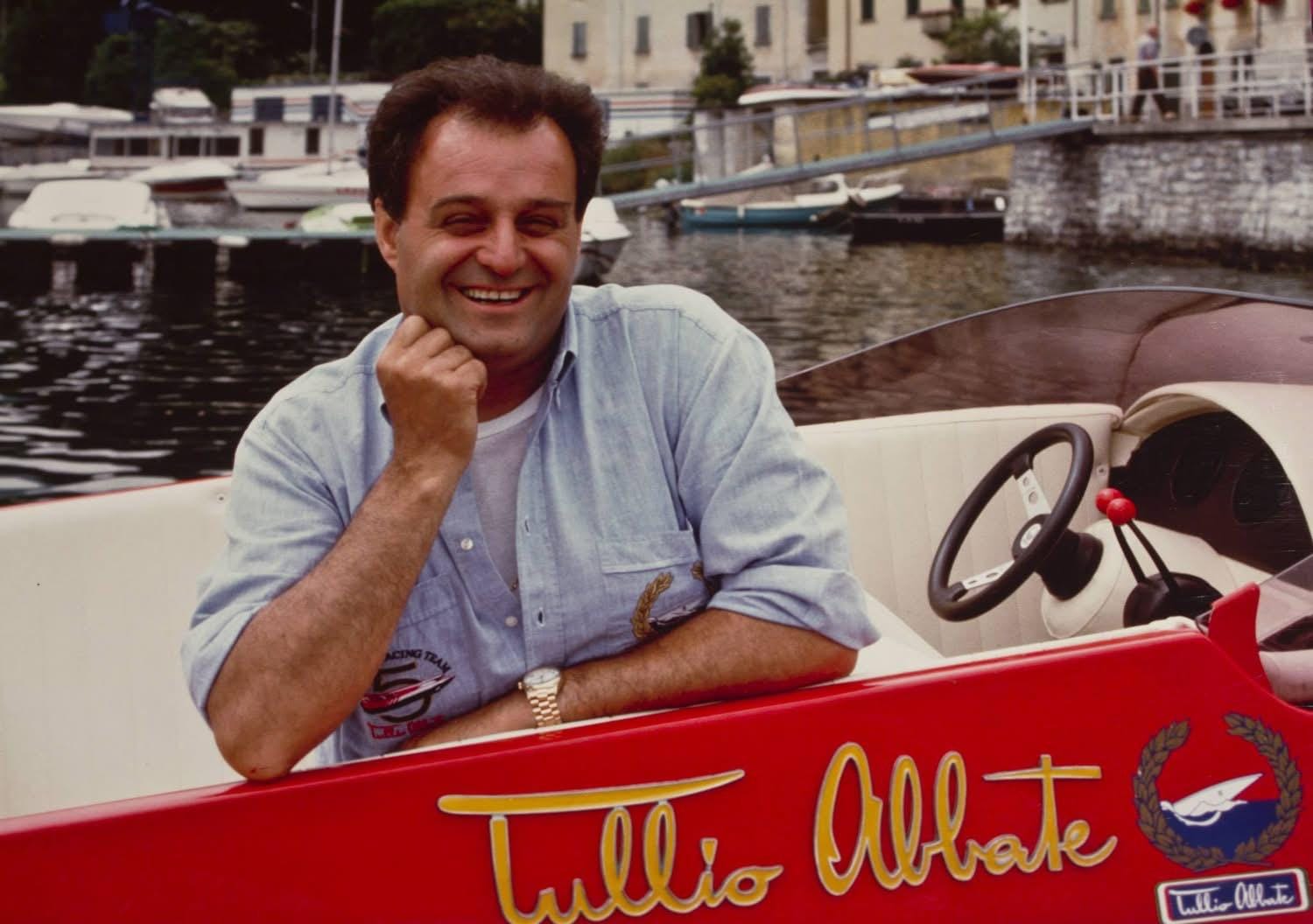


Tullio Abbate: a legend of the sea, always racing toward the future.
This is more than a meeting between two names.
It is a celebration of Italian craftmanship, performance and legacy.
“I was fifteen when I first stepped into my father’s shipyard on Lake Como. That’s where I learnt how to challenge the water and time itself.“
Tullio Abbate Jr.

A PATH DRAWN ACROSS
THE WATER
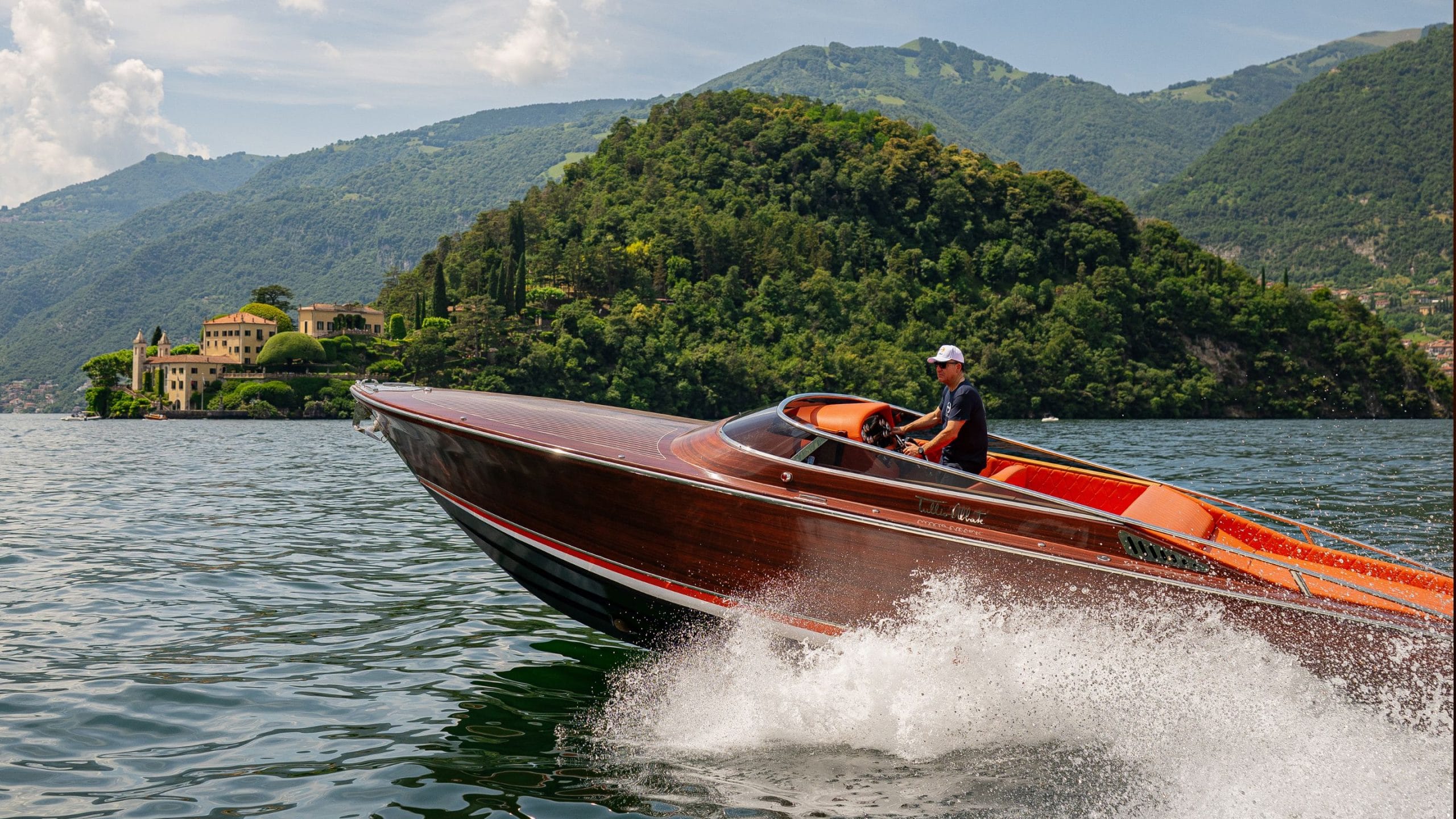
Every day, toward evening, the postcard-perfect silence of Lake Como is broken by a thunderous roar. Between Punta Balbianello and the timeless beauty of Bellagio, where the water lies flat and the sun begins to sink behind the mountains, a bullet-shaped powerboat cuts across the lake. At the helm is Tullio Abbate. For almost a century, this stretch of water, embraced by Lenno, Azzano, Tremezzo, Griante, and the villages that have watched generations of boats race past their shores, has been the stage of a ritual unlike any other. A pagan celebration of speed, sound, courage, and craftsmanship. Here, Italian power boat racing was born. Here, Guido Abbate, Tullio’s father, helped invent the art of velocity on water. And here, Tullio Abbate continued that legacy, tracing an invisible path across the lake: impossible to see for most, perfectly clear to him.
His shipyard was born from a passion for speed and from a family story deeply rooted in the waters of Lake Como. Its symbol carries the essence of that world: blue for the solidity of the hull and the depth of the lake, gold for preciousness and victory, red for the fire of speed. Among its most powerful signs is the number 5, assigned to Tullio in 1963, when he entered and won the legendary Centomiglia race with the first plywood craft, a boat that left builder sand pilots astonished. From that day on, the number became more than a race number. It became an amulet, a signature, a symbol of destiny. These lines are a tribute to Tullio Abbate: to the man, to the legend, and to the shipyard that bears his name. It draws from the strength of his character, the generosity of his nature, and the respect he has always shown to those who offered him friendship, trust, and loyalty.
TULLIO ABBATE WINS EVERYTHING. HE WINS IN LIFE, TOO: 1969, HE OPENS HIS FIRST SHIPYARD ALMOST DIRECTLY OPPOSITE HIS FATHER’S. THE CHALLENGE GOES ON.
Across these lines runs the same passion that has moved the Abbate family from one generation to the next, from father to son: a passion for boats, for speed, for design, and for the endless challenge of mastering water. It is a passion born on Lake Como, shaped by the sound of engines, the rhythm of waves, and the instinct of men who saw the lake not simply as a landscape, but as a place where dreams could be tested, pushed, and transformed into legend. That passion turned Lake Como into a stage known throughout the world, a natural theatre of speed and elegance where craftsmanship met courage and where every boat became an expression of character.
Through his vision, Tullio Abbate gave form to a unique idea of performance: not only power, but balance; not only velocity, but control; not only design, but emotion. His boats were never just machines. They were objects of desire, built for those who understood the beauty of risk, precision, and movement. More than the story of a shipyard, above all, it is the story of a man who turned speed into an art form and, by following his own invisible path across the water, made history in doing so.
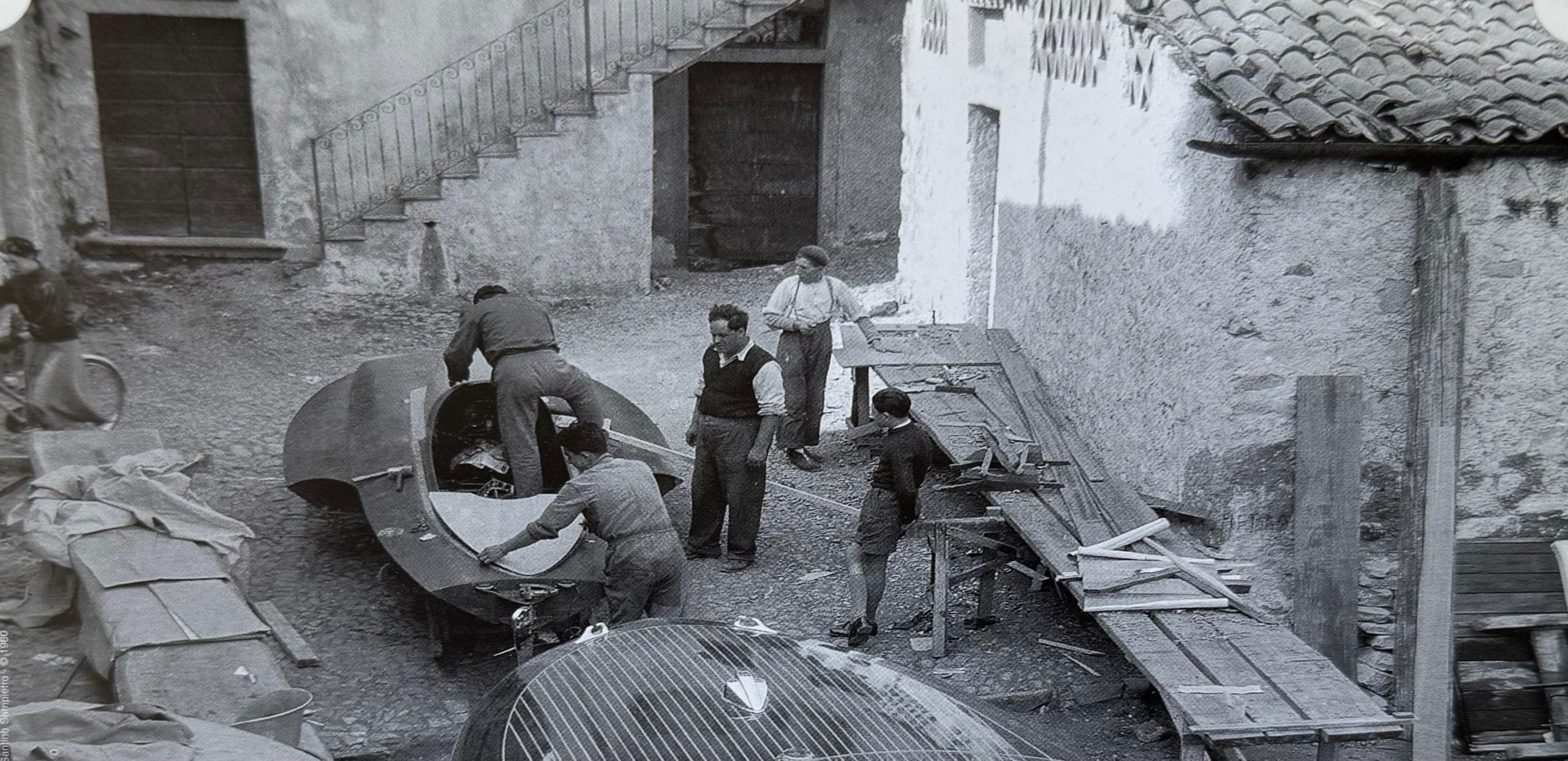
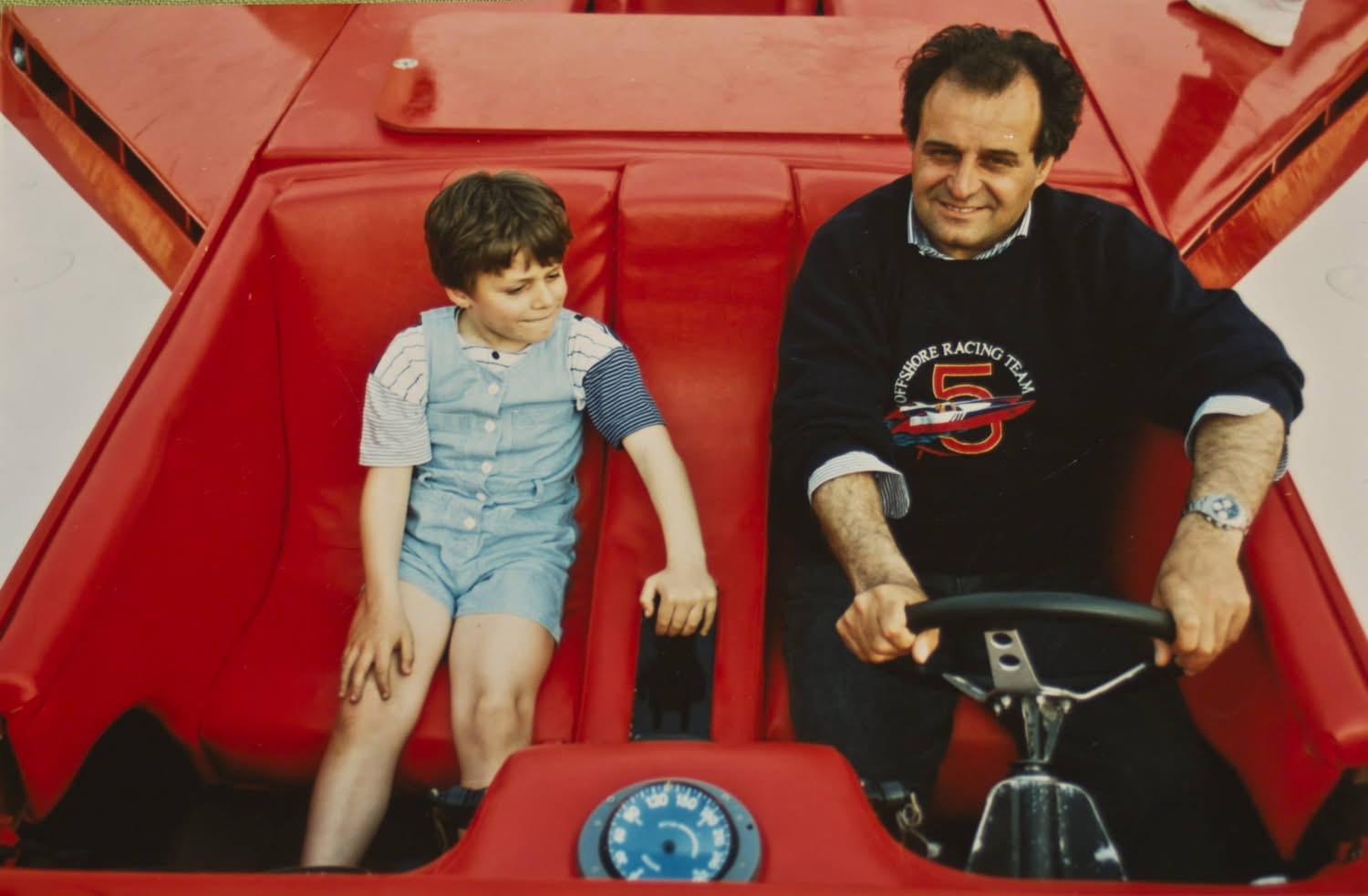
On January 1st, 1969, Tullio Abbate opened his shipyard, marking the beginning of a remarkable journey in the world of boating. But his passion for the sea was born much earlier. A true heir to the craft, he began working in the yard alongside his father, Guido Abbate, at just 15, learning the secrets of hull construction. By the age of 18, he had built his first boat and went on to win the Centomiglia del Lario in 1963 with the number “5”destined to become a symbol of victory.
“At eighteen I bought my first boat. Soon after, the number five carried me to victory, becoming a symbol of speed, craftsmanship, and legend.”
Tullio Abbate Jr.
THE ICONS
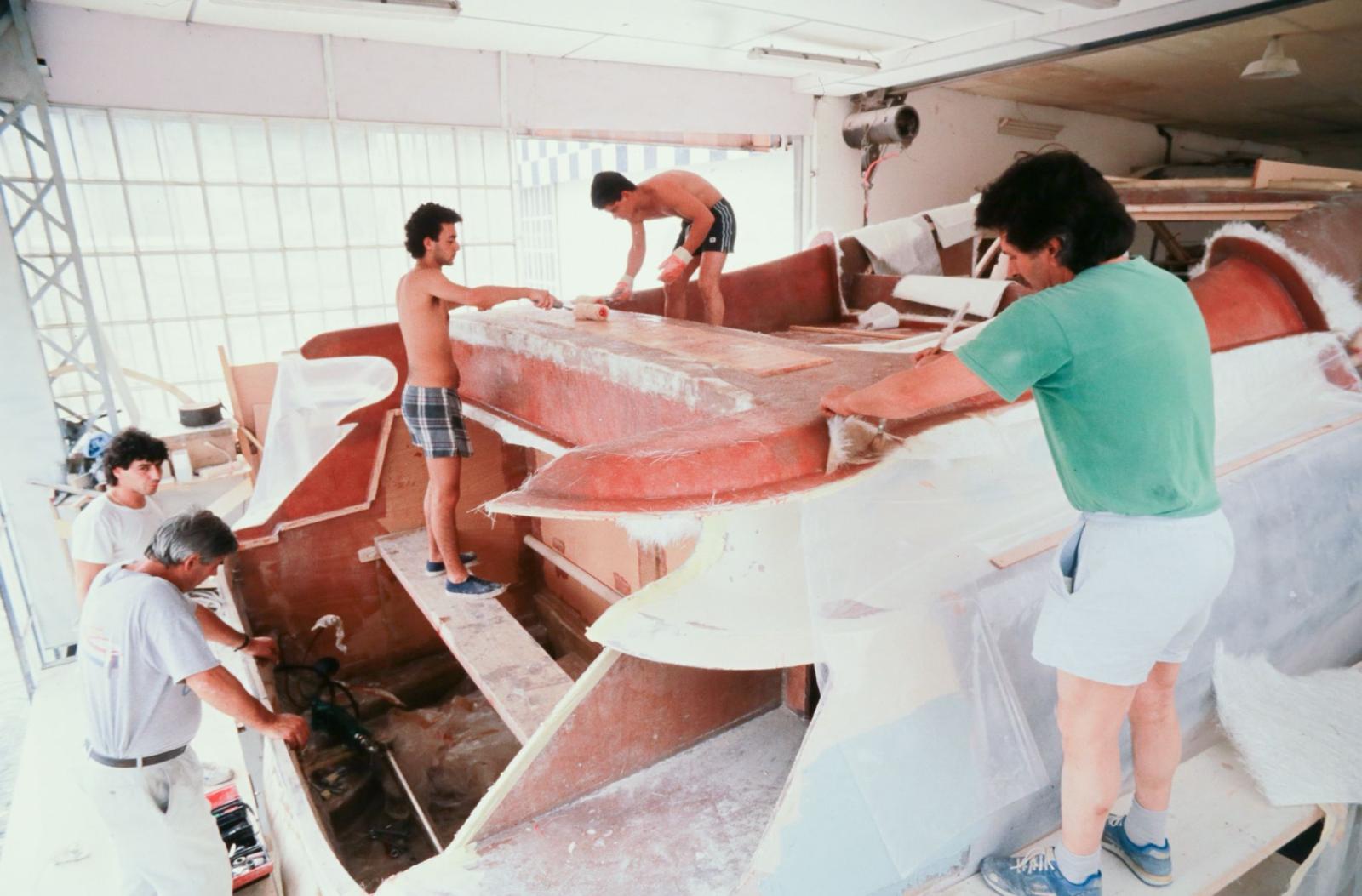
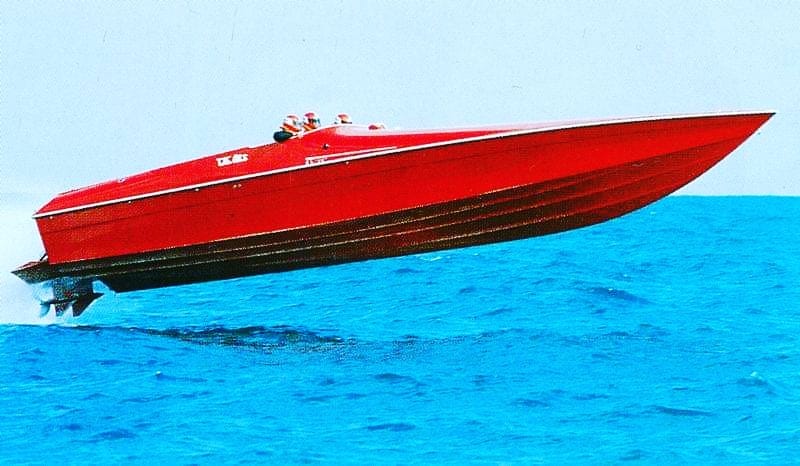
Tullio Abbate boats have crossed the world’s most celebrated waters, becoming objects of desire for discerning owners, collectors, and legendary figures from the worlds of sport, racing, and culture. Over the decades, the shipyard’s creations have attracted an extraordinary circle of clients: men and women drawn not only to speed, but to craftsmanship, character, and the unmistakable emotion of Italian performance. Among those associated with Tullio Abbate are some of the greatest names in international sport, including Michele Alboreto, Gerhard Berger, Björn Borg, Jacky Ickx, Niki Lauda, Diego Armando Maradona, Adriano Panatta, Riccardo Patrese, Nelson Piquet, Alain Prost, Karl-Heinz Rummenigge, Dejan Savićević, Michael Schumacher, Roberto Mancini, Gianluca Vialli, Keke Rosberg, Nico Rosberg, and many others. Their presence tells a story that goes far beyond ownership. It reflects the unique status of Tullio Abbate boats: machines built for those who understand performance instinctively, who recognize the value of design, and who see the water as another arena in which passion, precision, and adrenaline come together.
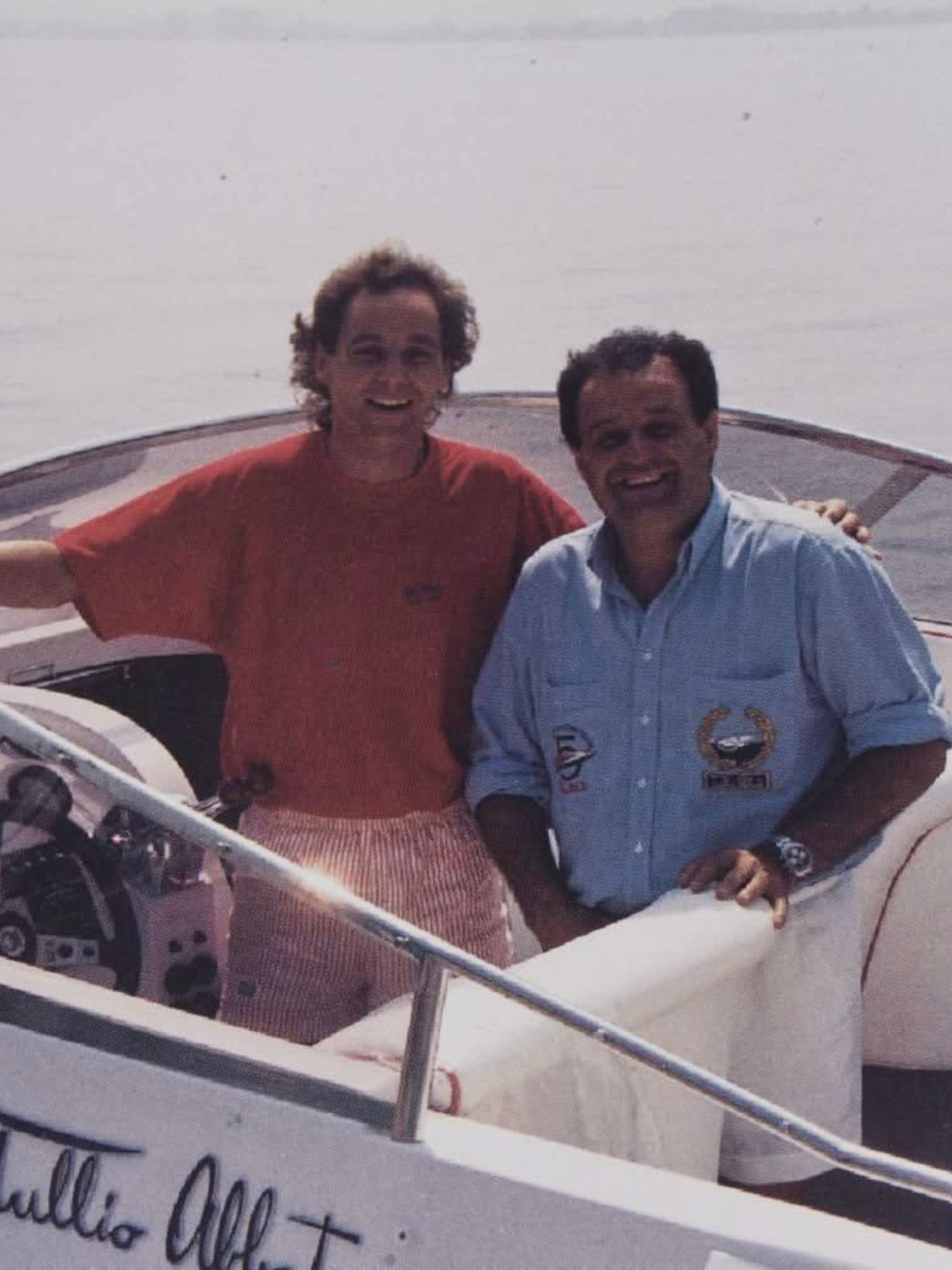
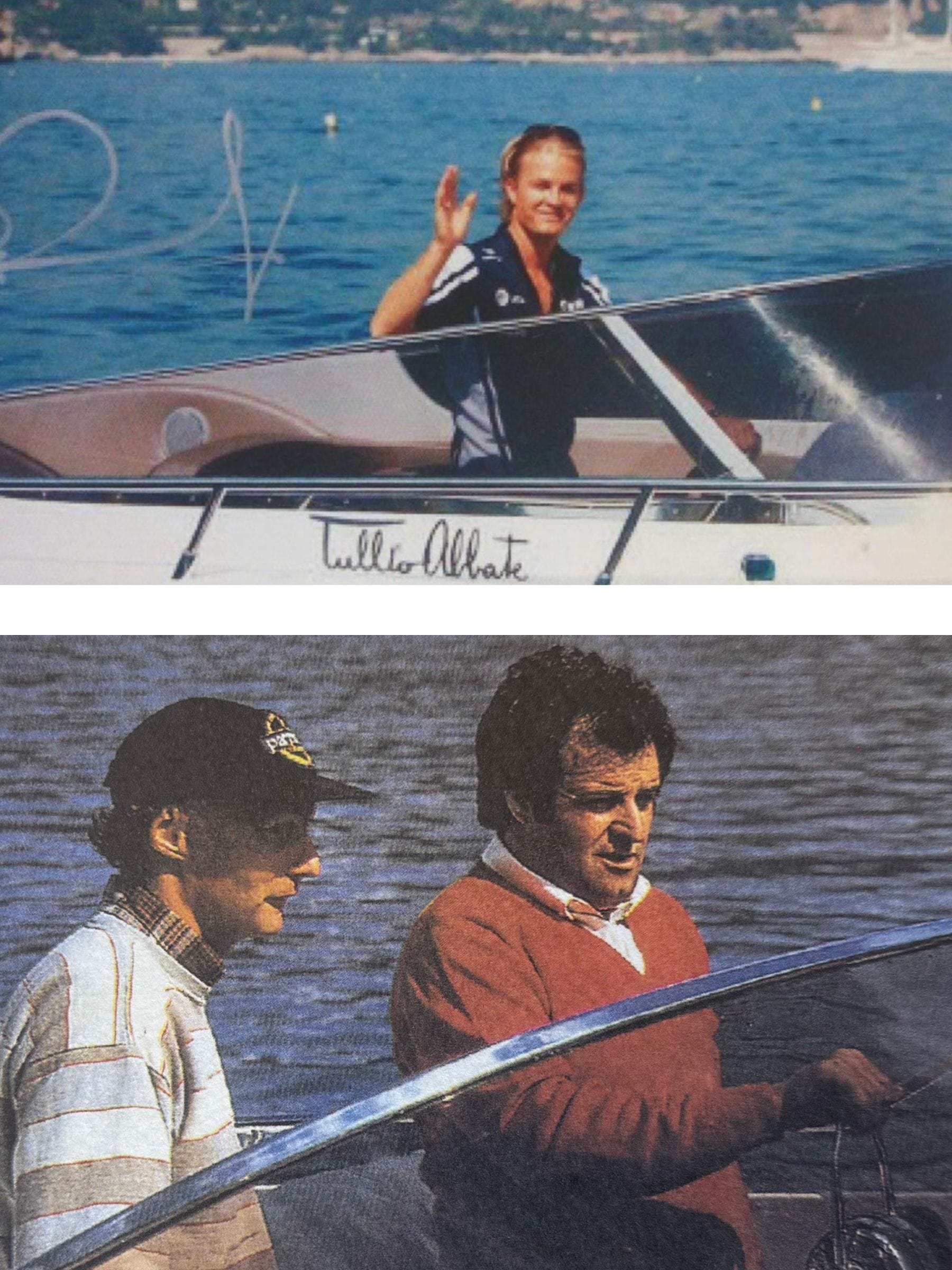
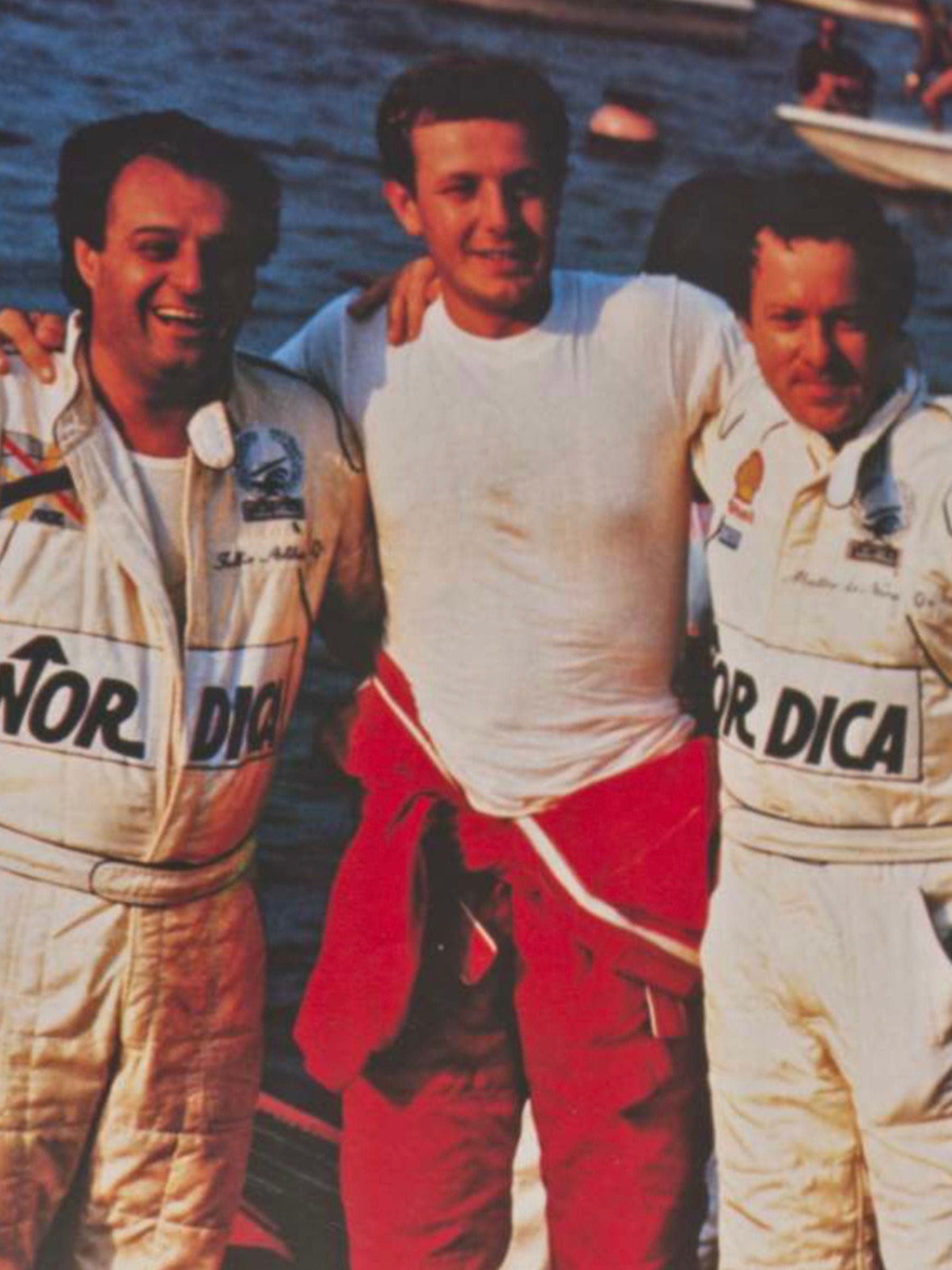
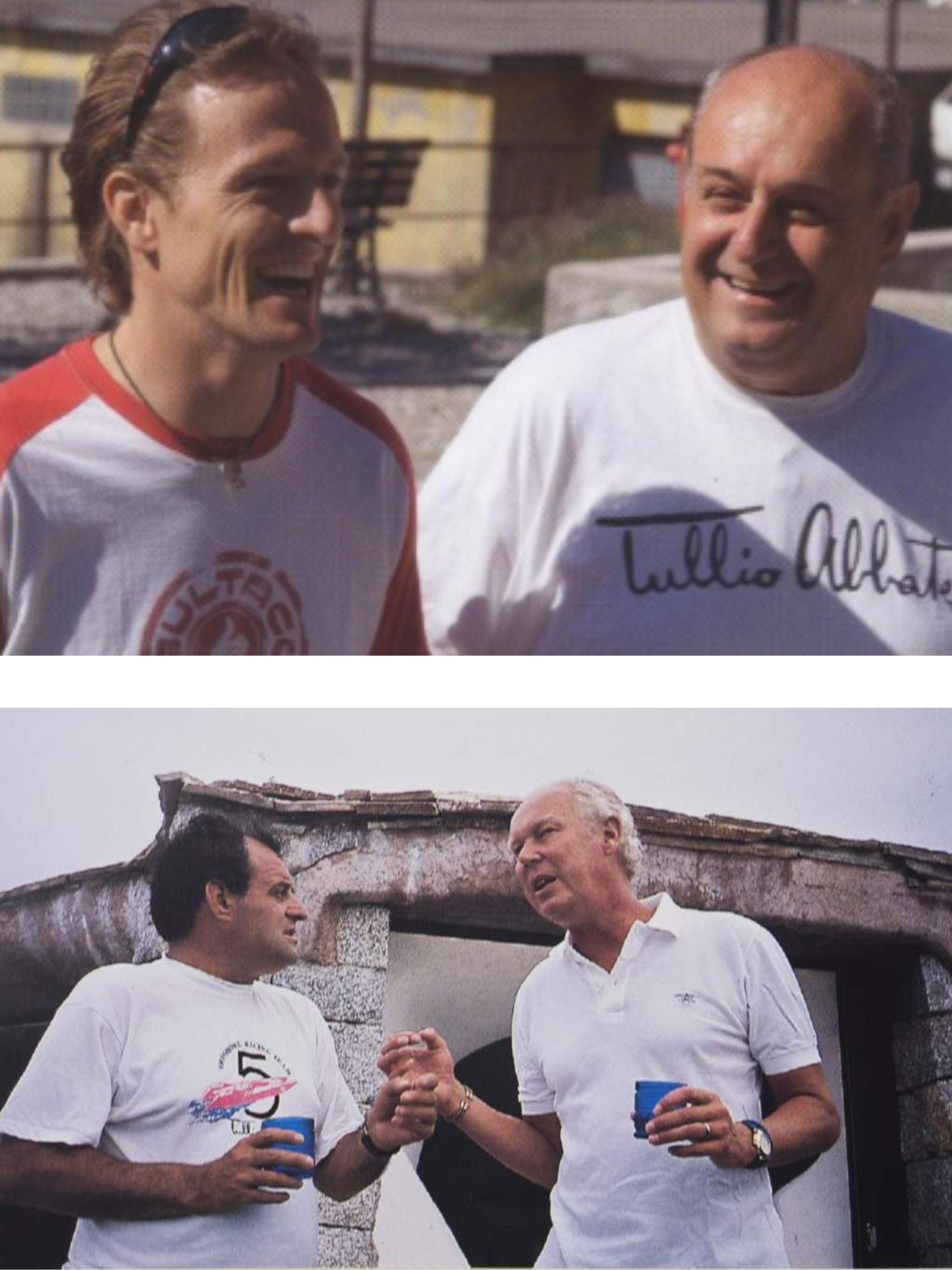
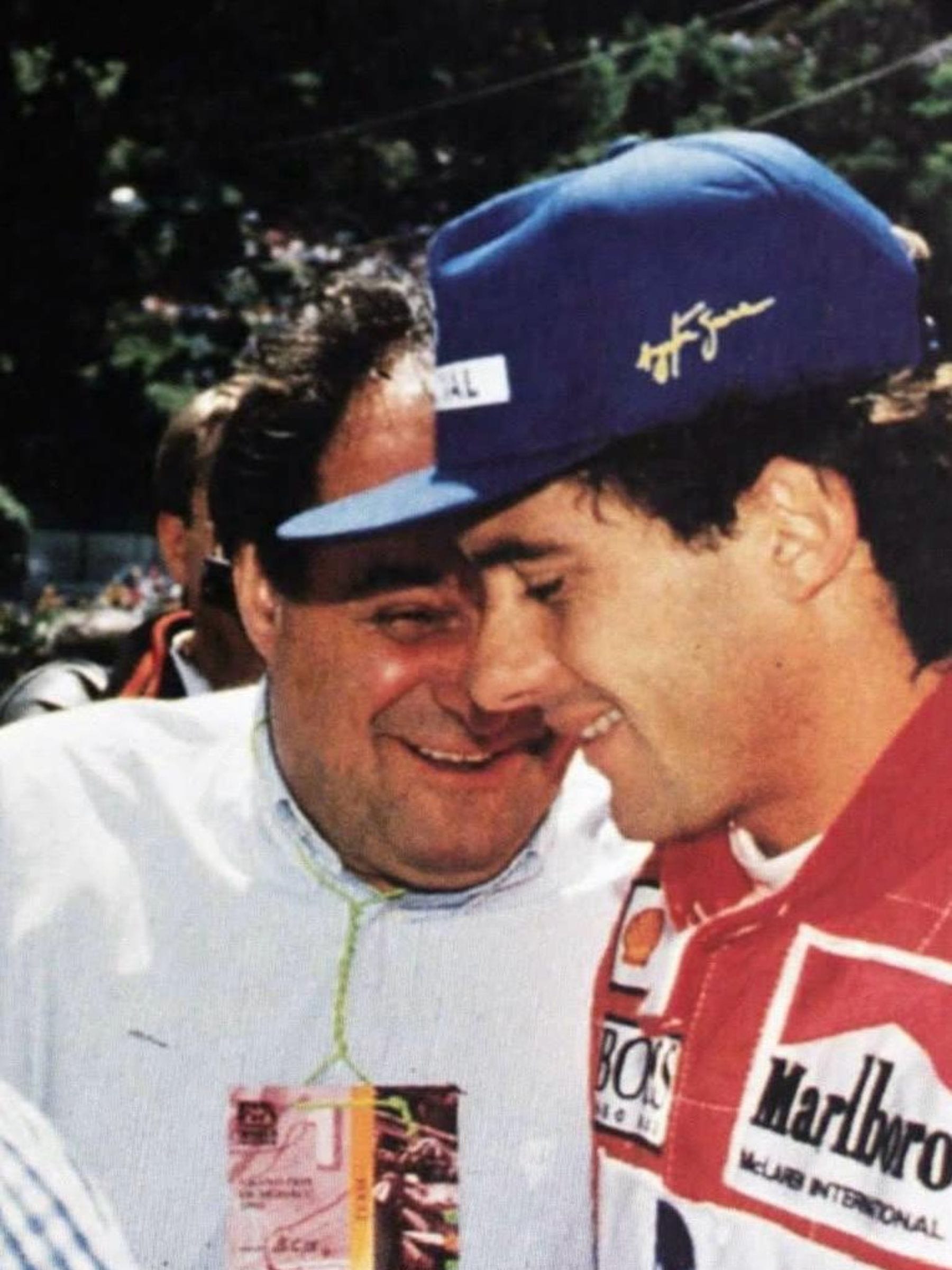
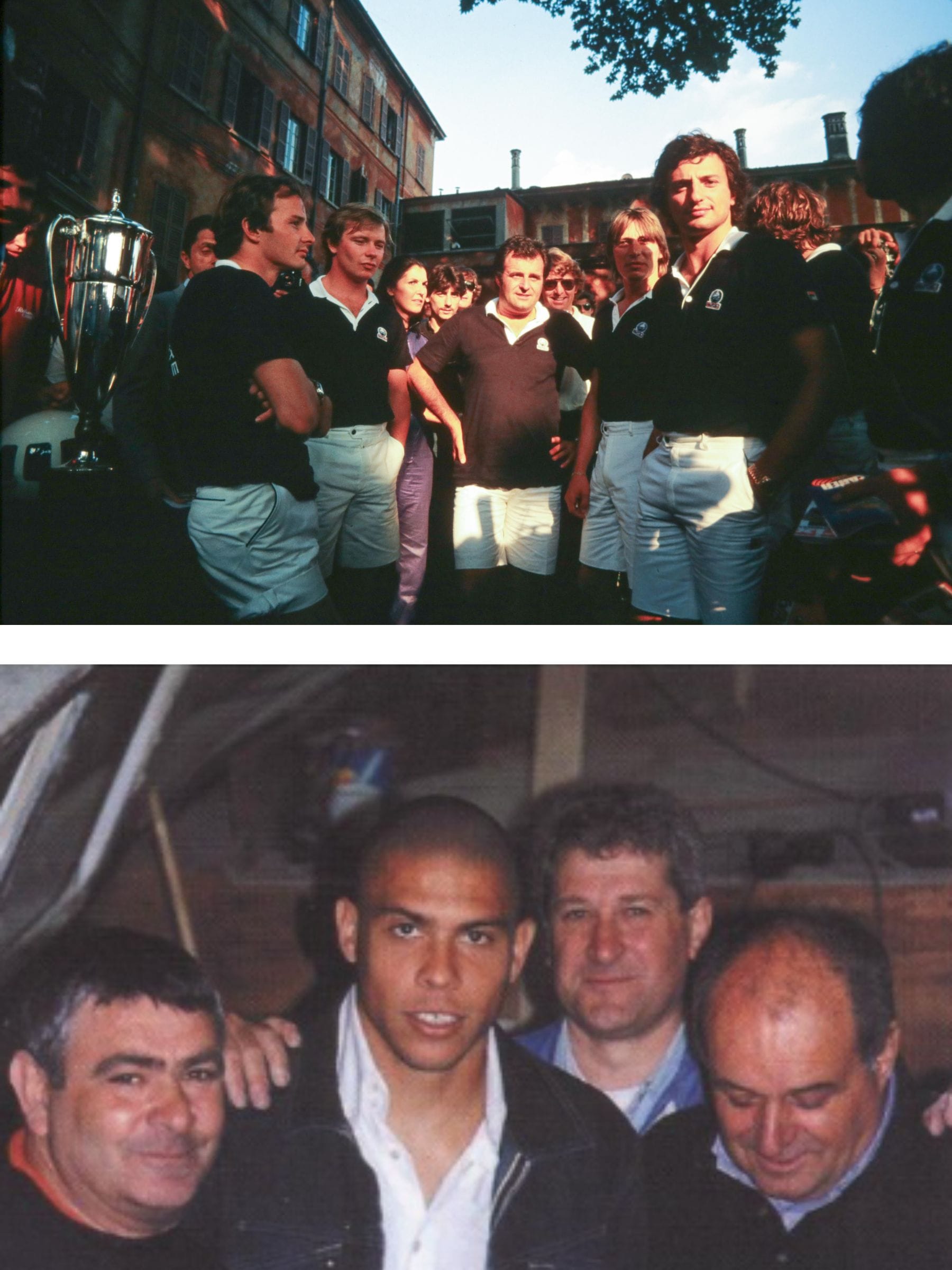
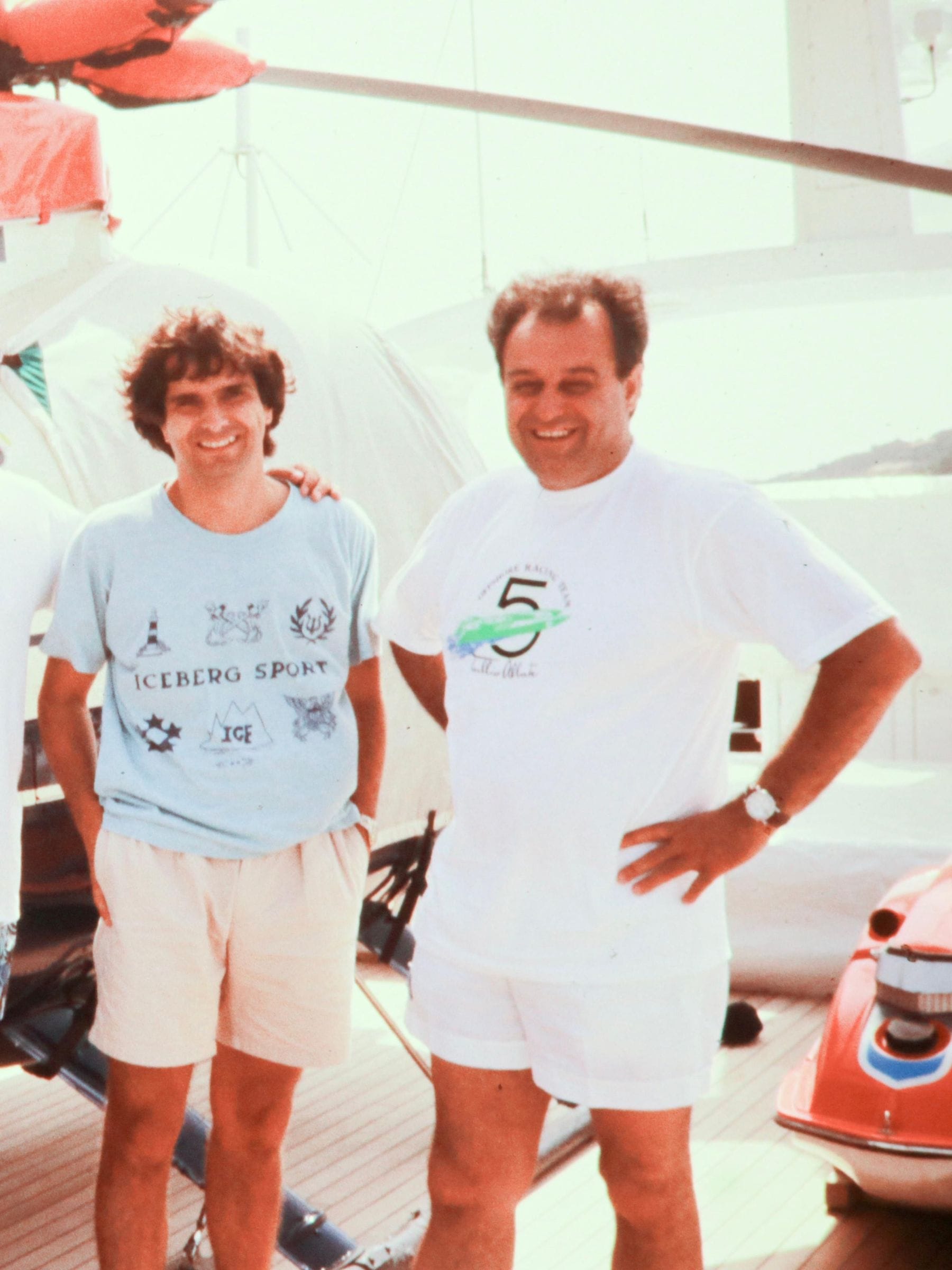
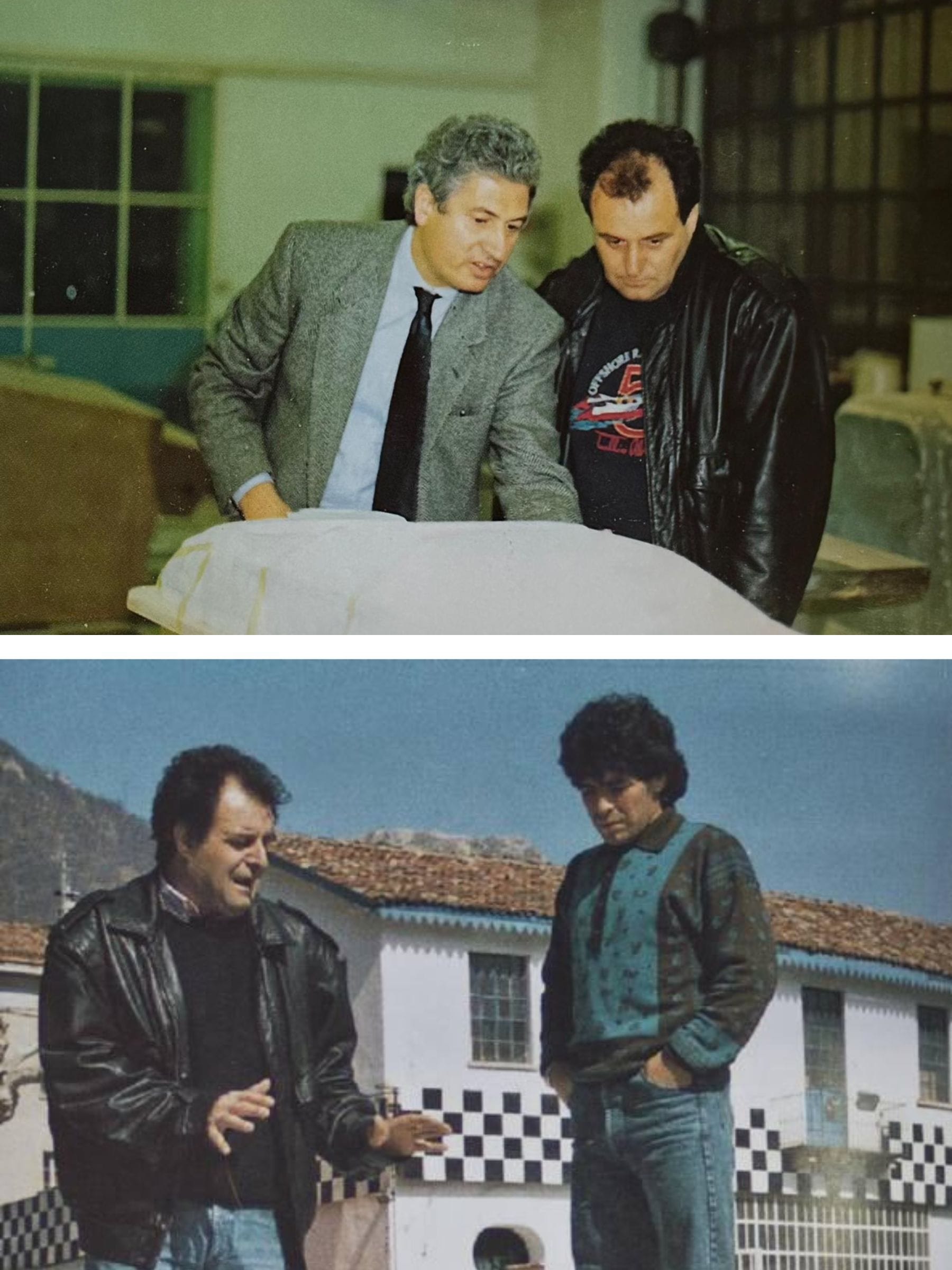
DESIGNED BETWEEN
TIME AND WATER
FROM HULLS TO DIALS
After tracing the story of Tullio Abbate, now we enter the place where that legacy still takes shape: the shipyard. It is here, among hulls, materials, tools, engines, and details designed for performance, that UNIMATIC x Tullio Abbate watches were photographed and brought back to their natural context.
This section explores the two timepieces created for the collaboration, not only as commemorative objects, but as instruments built around the same principles that define a Tullio Abbate boat: function, precision, resistance, proportion, and character.
The dialogue between watchmaking and nautical design becomes visible through materials, colours, construction, and details, a shared language where time, speed, andcraftsmanship meet.
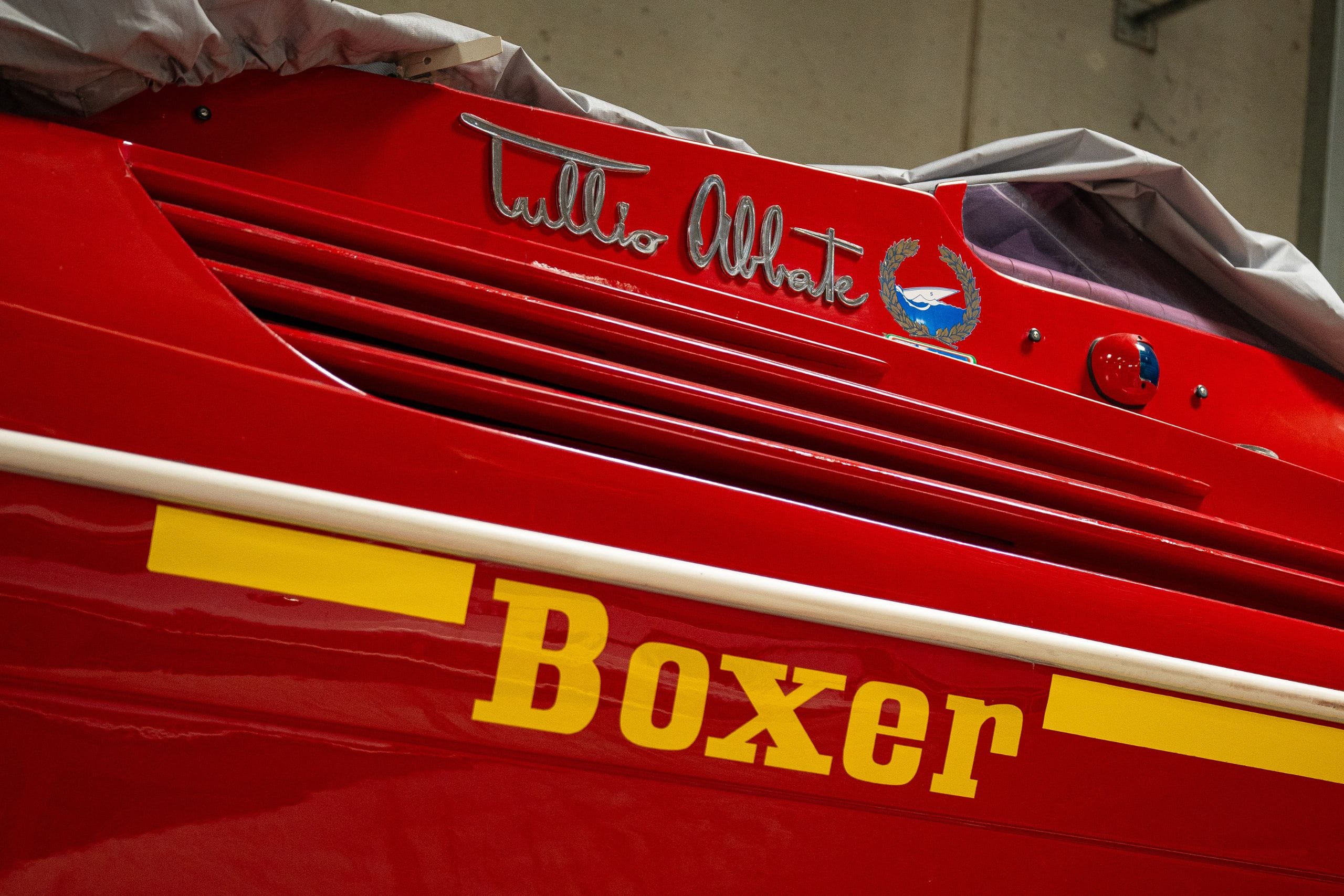
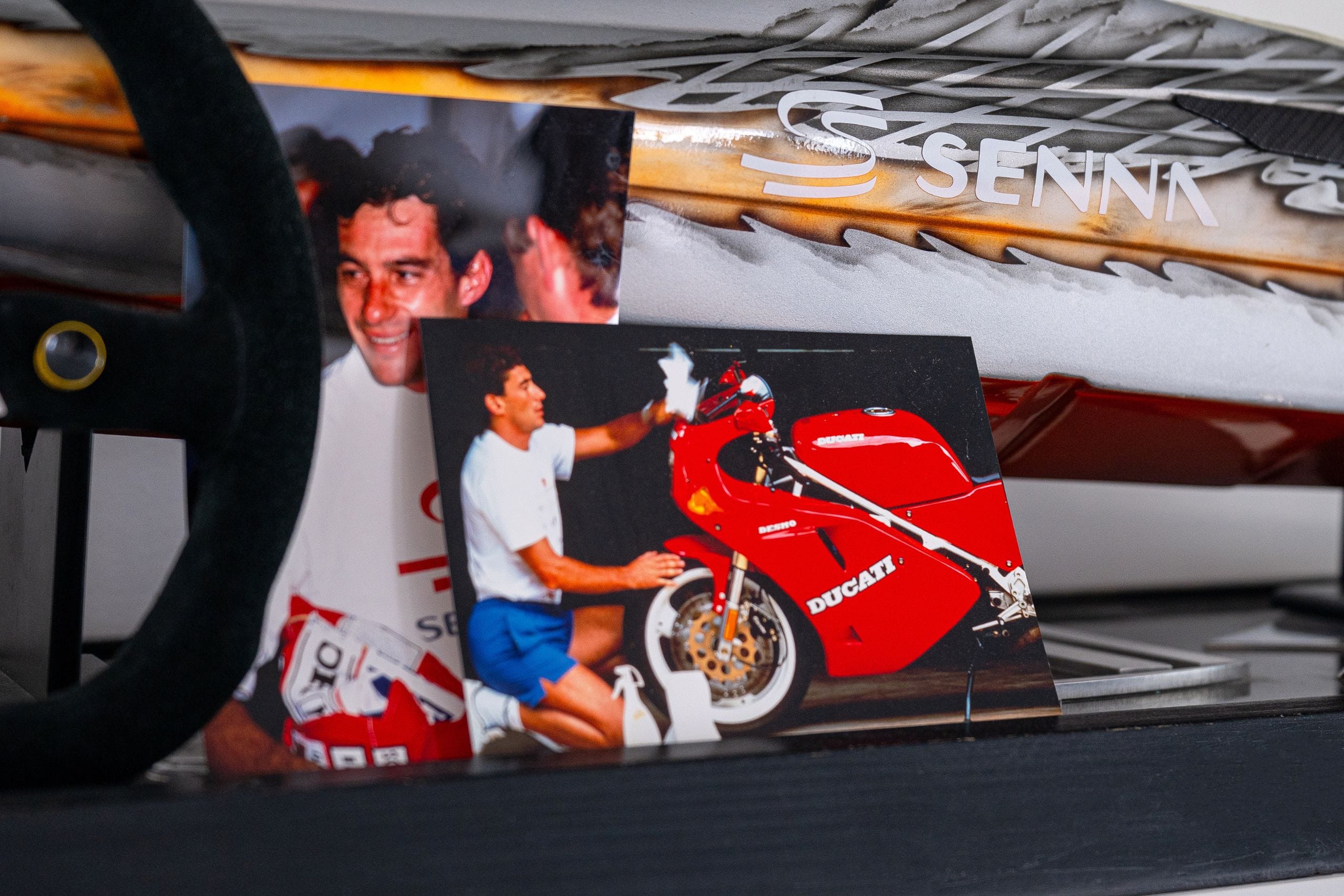
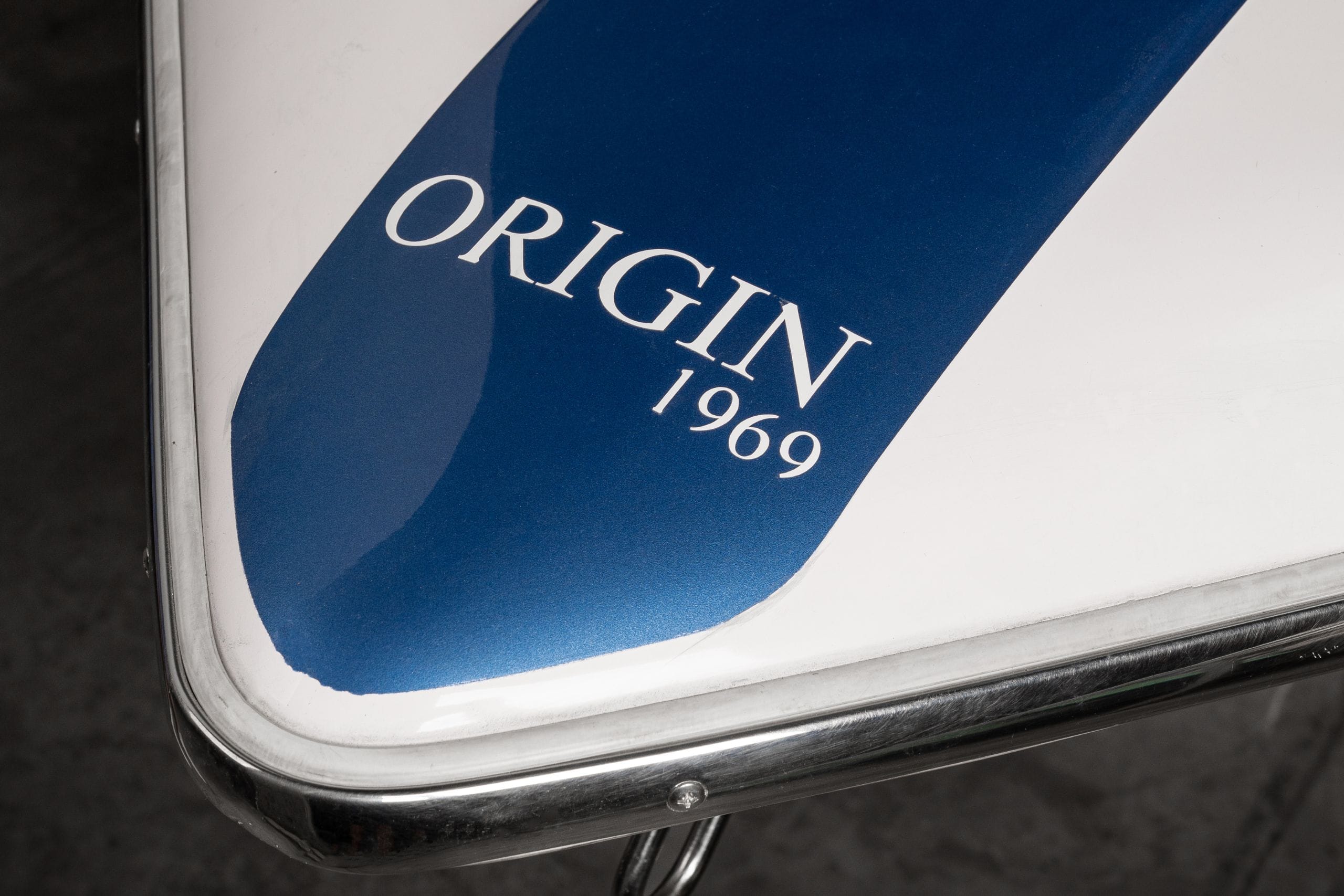
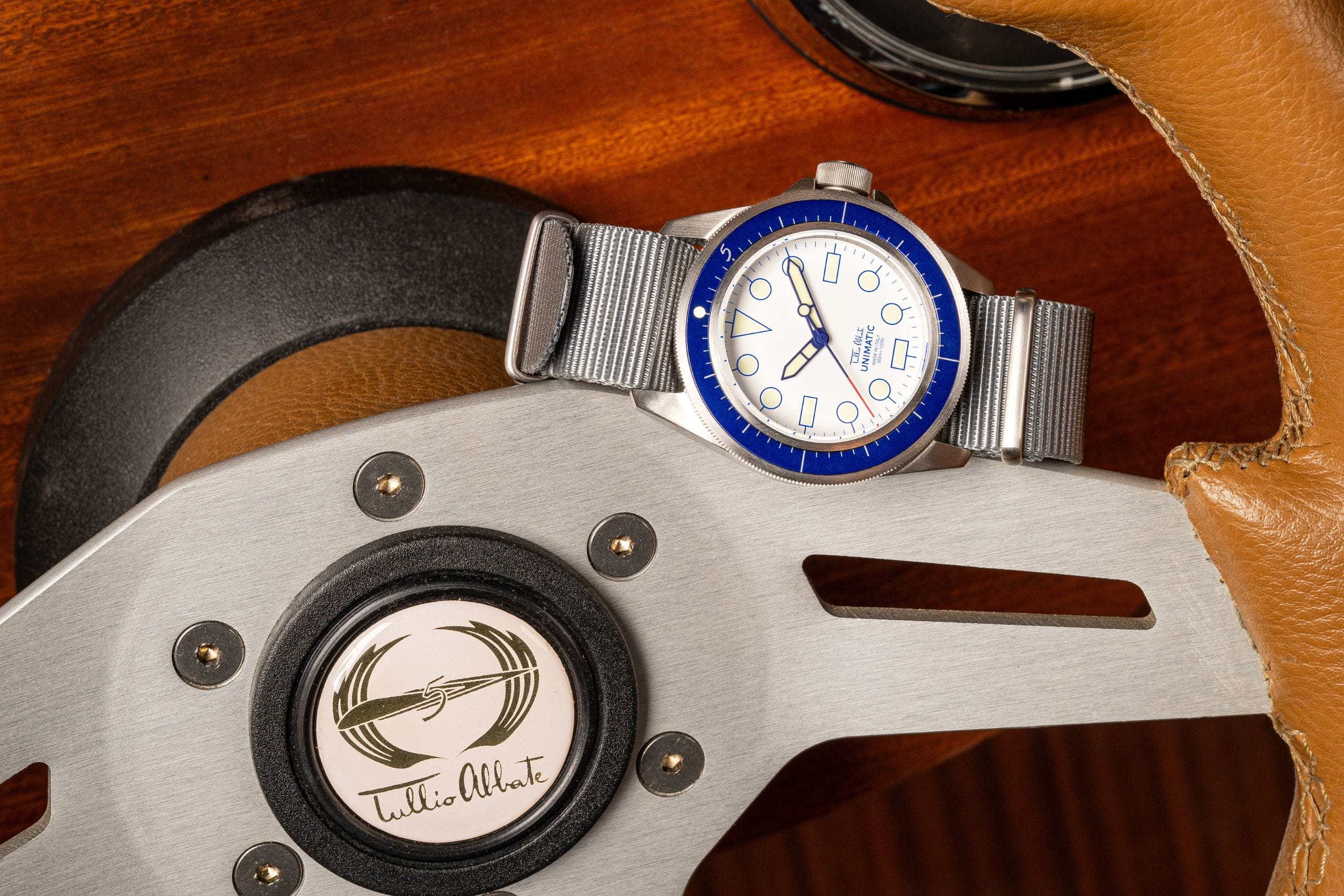
“We share the same vision, a respect for time, design, and challenge.”
Tullio Abbate Jr.
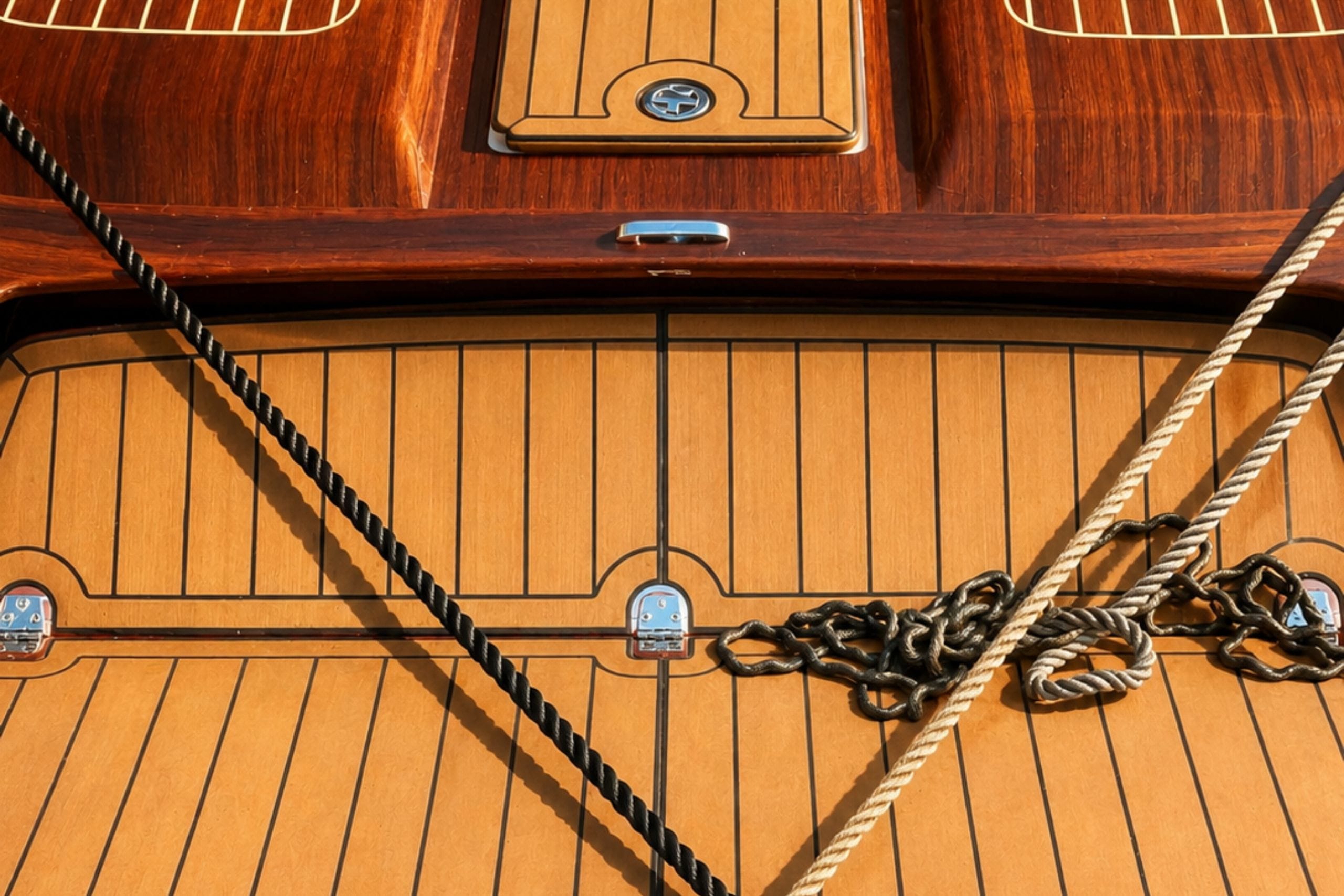
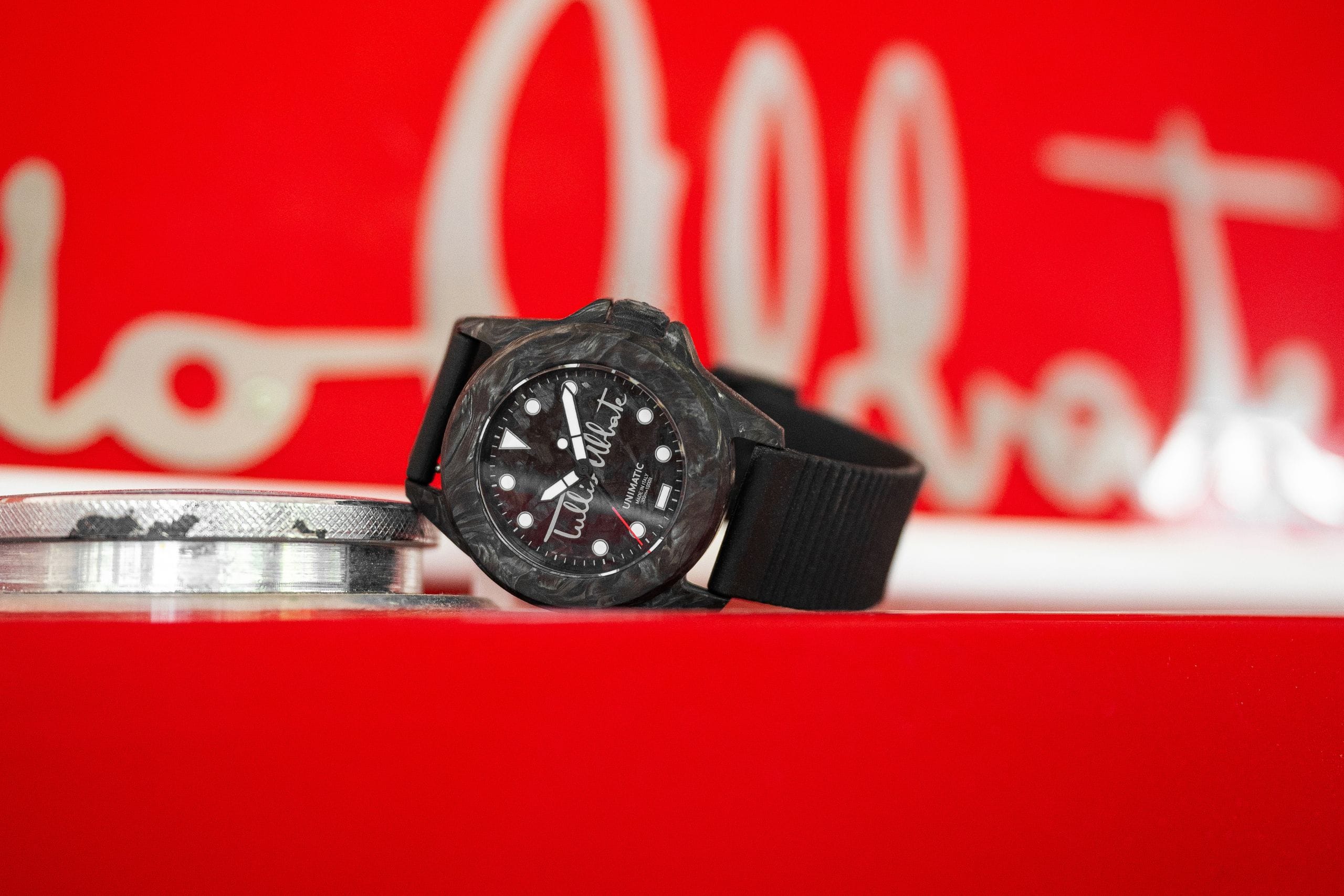
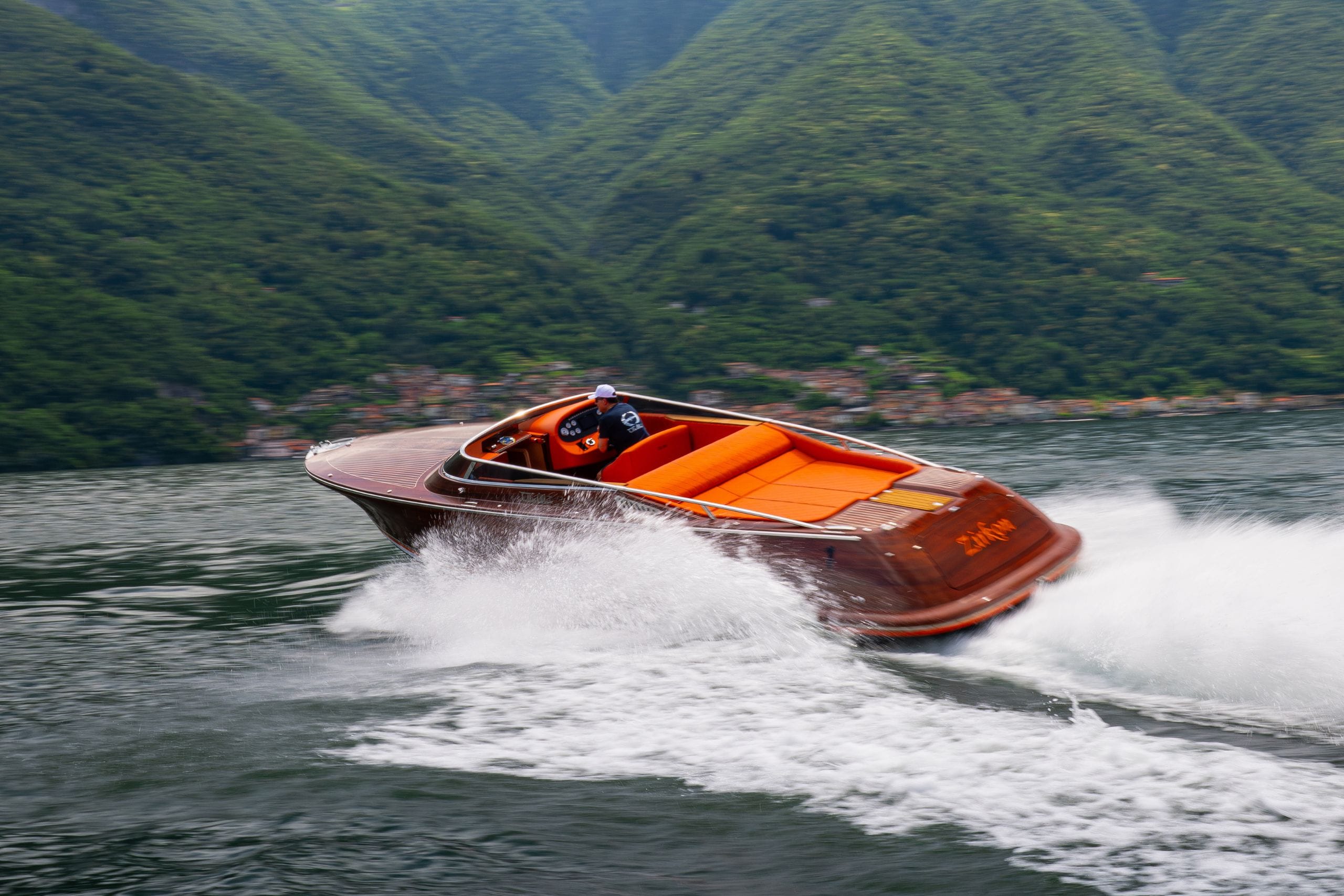
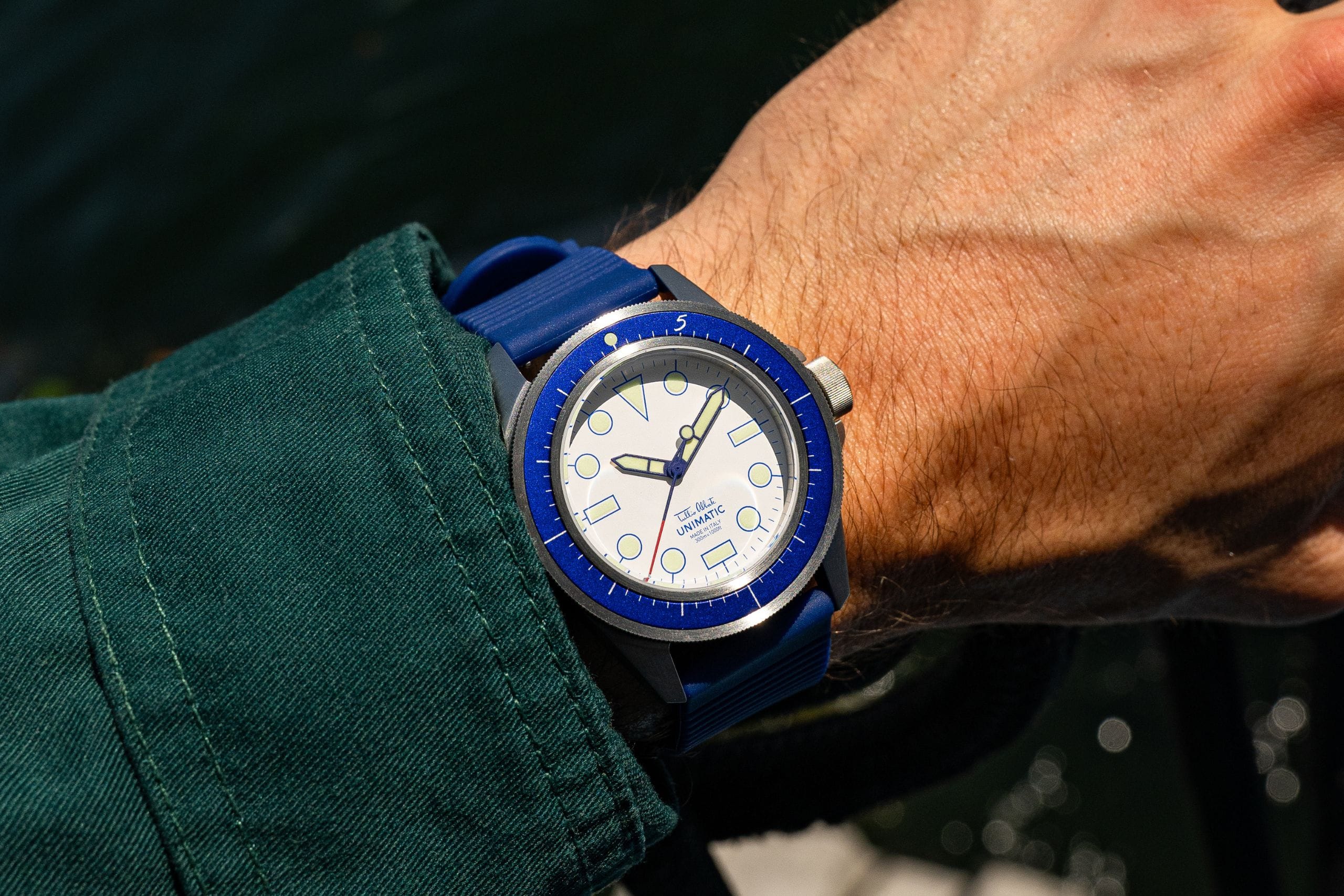
TWO WATCHES THAT HONOUR A LEGEND DRAWN ON WATER AND CARRIED BY PASSION, ENGINES, AND TIME.
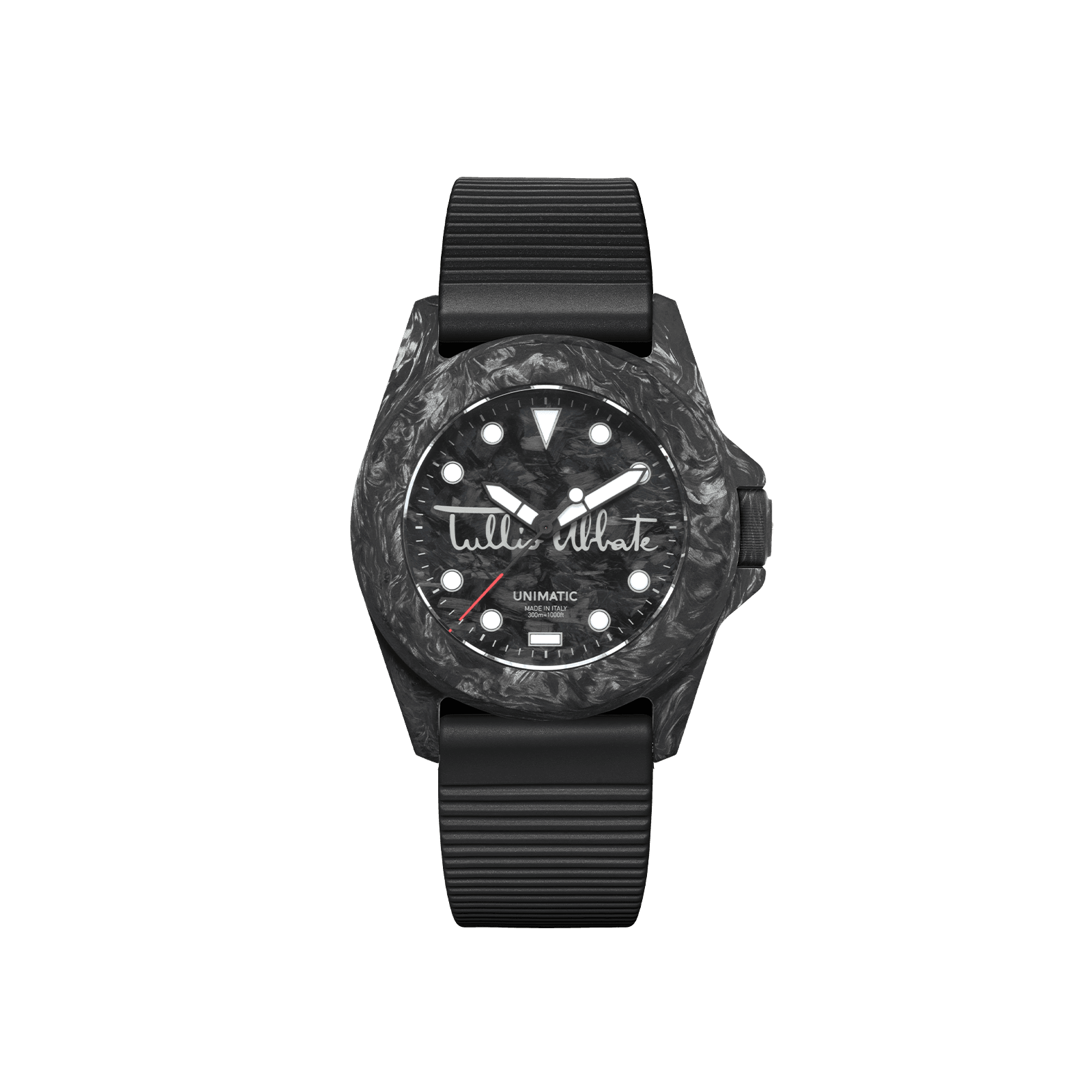
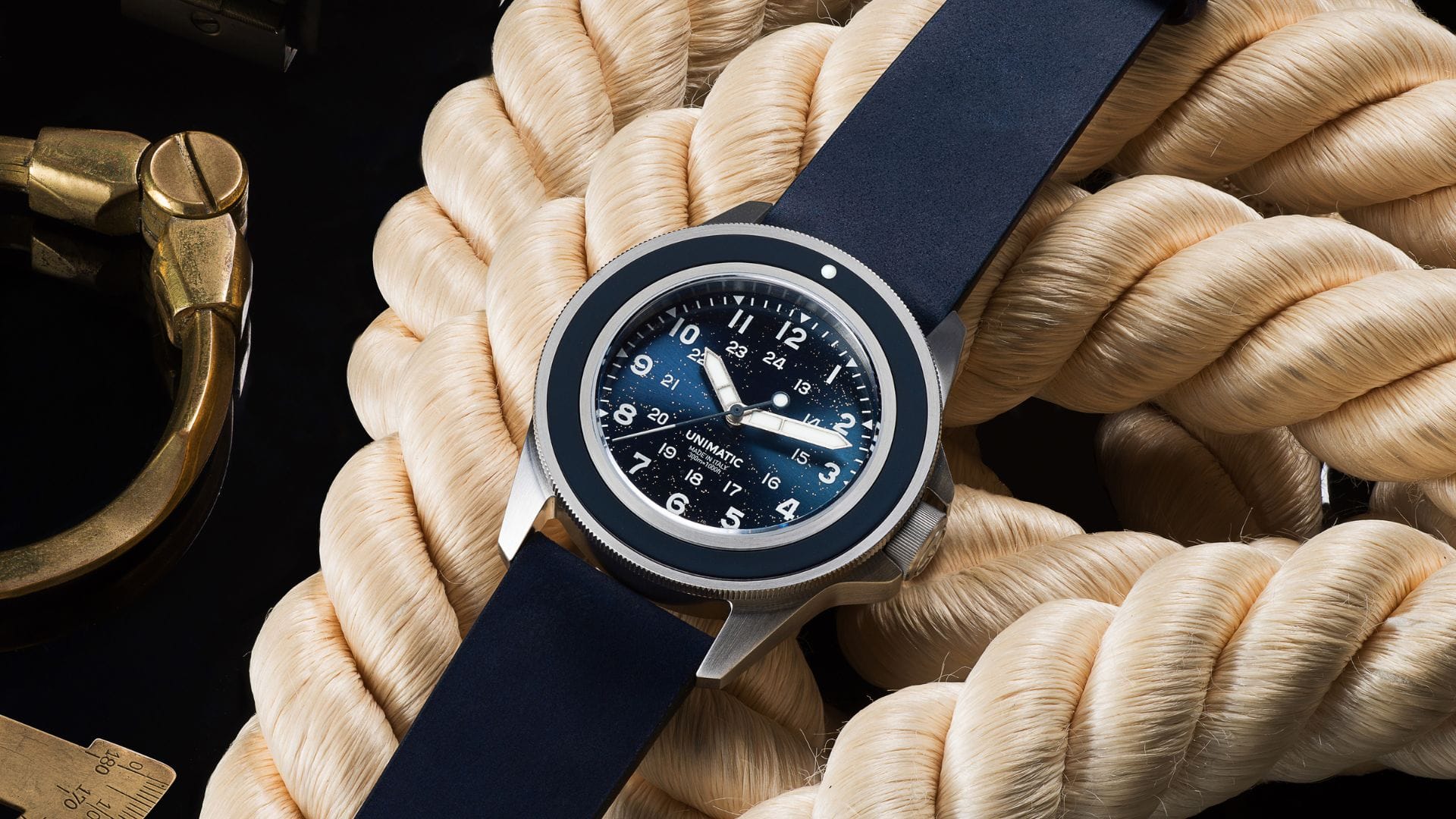
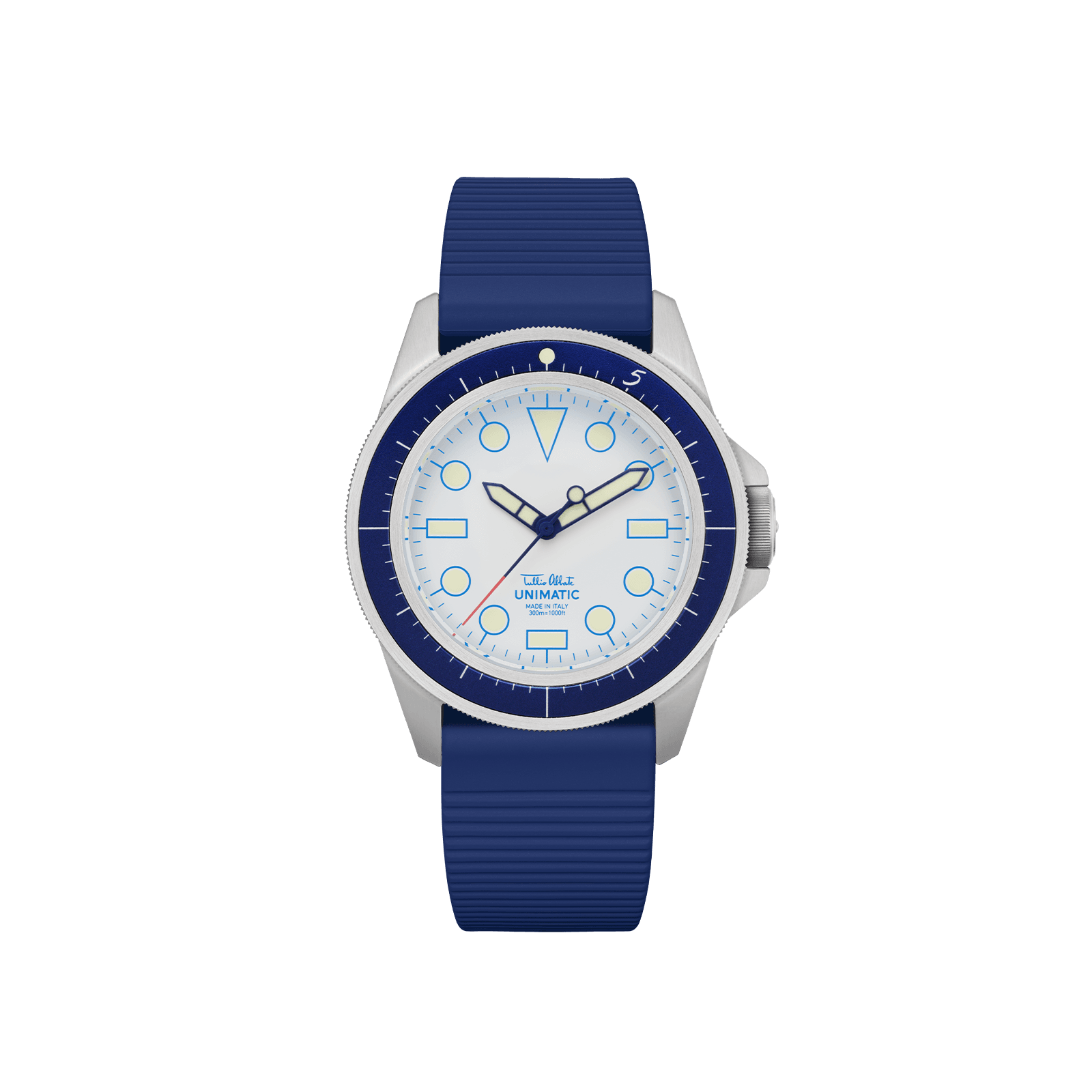
In the Modello Uno U1-TAB, this approach is expressed through the solid architecture of UNIMATIC’s professional dive watch. The brushed stainless steel case, 300-metre water resistance, screw-down crown, and mono-directional safety bezel define a watch conceived as a reliable instrument. Its nautical identity appears through measured details: the reflex blue bezel, the matte white dial, the blue trims, and the Tullio Abbate number 5. These references do not simply decorate the watch; they translate the codes of the shipyard into a technical and wearable object. The Modello Quattro U4S-C-TAB pushes the same idea toward a more material-driven dimension. Its forged carbon construction recalls the world of advanced composites, lightness, and high-performance engineering, values strongly connected to offshore boating.
The matte finish, fixed monoblock bezel, flat sapphire crystal, and minimal dial reinforce a sense of control, precision, and functional restraint. The parallel between boats and watches is therefore notonly symbolic. In both cases, design is the result of discipline. The cockpit of a boat and the dial of a watch respond to the same need:to place the user at the centre of the experience. Visibility, balance, proportion, and immediate control are essential. Nothing is excessive, nothing is accidental. For this reason, the collaboration works as a true meeting of design cultures. Tullio Abbate brings the language of speed, water, engines, interiors, and technical instinct. UNIMATIC brings its contemporary vision of watchmaking, based on minimalism, durability, and precision. Together, they show that true design is not simply what makes an object beautiful, but what makes it purposeful, reliable, and unmistakable.

Modello Uno U1-TAB Collab – Diver
EDITION OF 200€ 810,00
Modello Quattro U4S-C-TAB Collab – Time Only
EDITION OF 50€ 2.440,00